Continuous Insights for Pre-Hospital Care.
The most important decisions are made before the hospital.
Physiological deterioration surfaced before heart rate or blood pressure visibly change.
ECG, BP, SpO₂, HR and pulse-wave data viewed as one trend model, not isolated readings.
Ultra-low-power, purpose-built inference running at milliwatt scale, fully offline.
Local storage and monitoring continue when connectivity drops or is unavailable.
A structured, time-stamped timeline designed to move in seconds at handover.
Designed to work with portable ultrasound, digital stethoscopes and future modules.
Built for ambulances, aircraft, field kits and demanding transport environments.
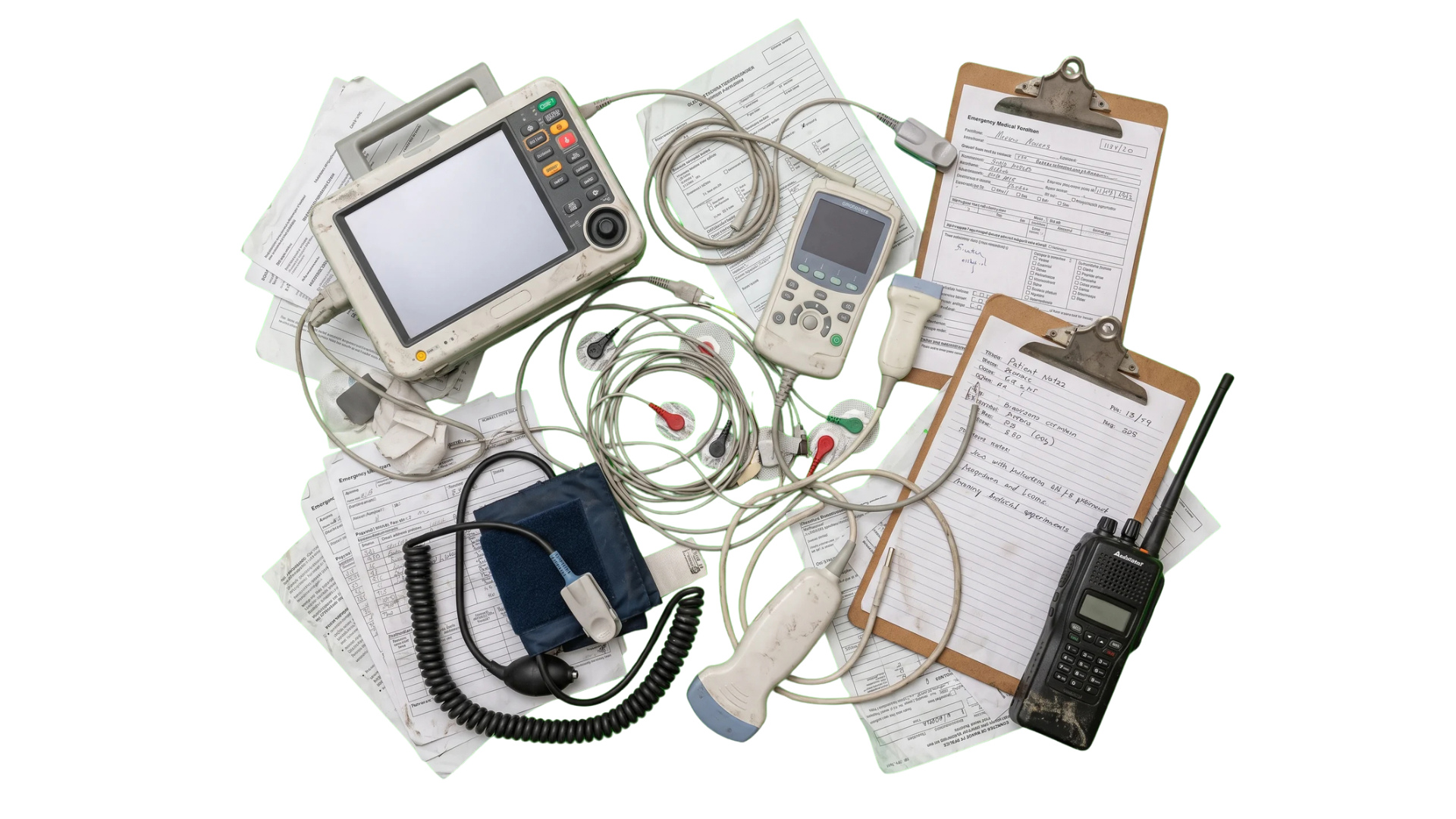
Critical information is still fragmented across devices, people, and places.
During emergency assessment and transport, clinicians may need to interpret information from several disconnected tools while simultaneously treating the patient, documenting interventions, communicating with colleagues, and preparing the receiving hospital. Important changes can become harder to recognise when measurements are viewed in isolation.
Vital signs, ECGs and diagnostics live across separate devices with separate interfaces.
Single point-in-time values can obscure the trend that matters.
Clinicians treat, document, communicate and interpret several tools simultaneously.
Rural, tactical and disaster environments cannot rely on the cloud.
Much of the patient's story is compressed into a short verbal handover.
Receiving teams often see only a summary of what actually happened.
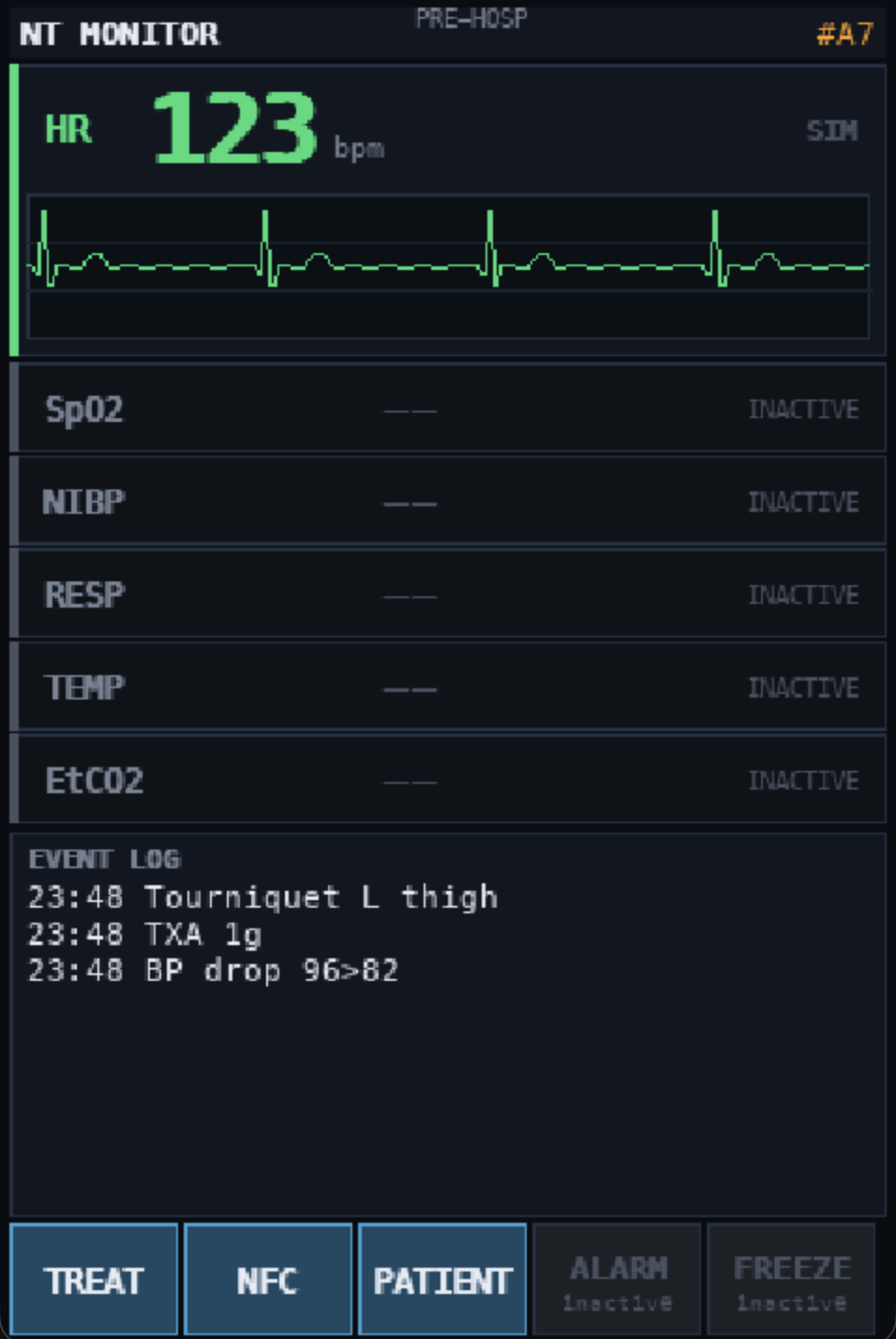
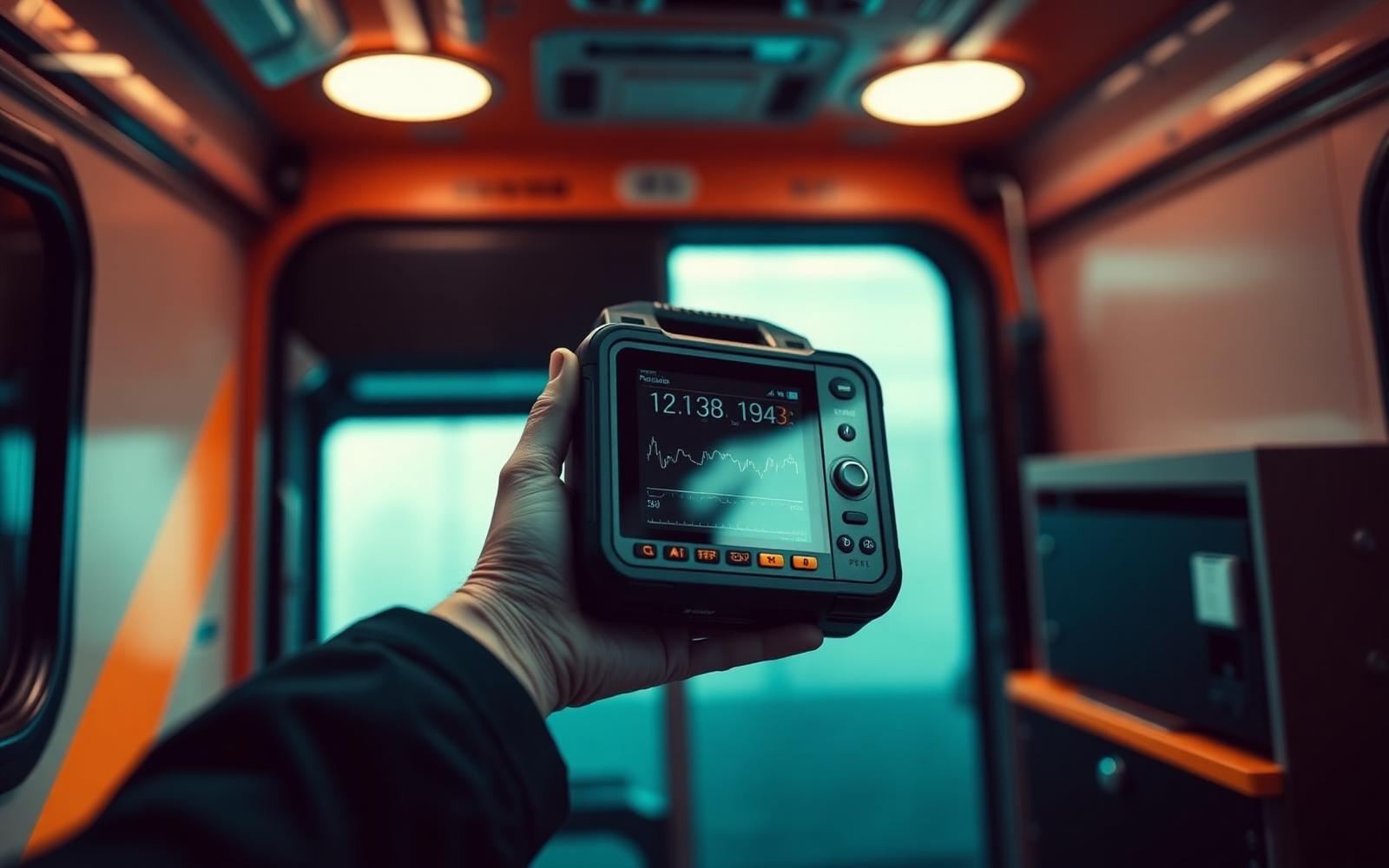
One portable hub for continuous pre-hospital insight.
Synetra is a portable, rugged pre-hospital intelligence hub designed to support EMTs, paramedics, air ambulance crews, combat medics and disaster-response teams during patient assessment, transport, and hospital handover.
Organized the way responders already think.
Massive hemorrhage · Airway · Respiration · Circulation · Hypothermia/Head — the sequence used to sequence life-threat management. Hemorrhage leads because it is the largest single category of preventable trauma death.
Massive Hemorrhage
Airway
Respiration
Circulation
Hypothermia / Head
Where each category stands today.
Different MARCH categories are at different levels of maturity. This is the honest read.
Demonstrated on synthetic, physiologically-modeled data — real-world clinical validation is the next milestone.
Accuracy preserved when deployed on the target neuromorphic chip.
Sensor architecture and integration path defined.
Head-injury monitoring paused; temperature tracking active.
On the roadmap; capnography path specified.
From first assessment to receiving team.
Concise stages the platform is designed to support — with information accumulating through every step.
- 01Connect
Attach available sensors and connected diagnostic tools.
- 02Assess
View current readings through a unified interface.
- 03Monitor
Track physiological trends continuously during care and transport.
- 04Recognise
Receive prioritised prompts when meaningful changes occur.
- 05Document
Build a time-stamped record of observations and interventions.
- 06Handover
Transfer the structured patient timeline to the receiving team.
Designed to support the people who deliver care.
Careful language matters. Synetra is designed to support — not replace — clinical judgement.
- Fewer fragmented information sources
- Clearer trend visibility
- Prioritised alerts
- Reduced manual reconstruction during handover
- Support during demanding transport environments
Questions we hear most.

Bring Synetra to your organisation.
Book a demo and join the Synetra waitlist. We'll schedule a session as demo slots open up — booking is non-binding and creates no purchase obligation.